Cervical cancer can already be progressing even when there are no obvious symptoms, which is why having tests at the set interval, regardless of whether symptoms are present, is the most reliable way of preventing it.
This article covers, in order, why cervical cancer progresses without symptoms, who is eligible for national screening and how often, which additional tests to consider, and the criteria for interpreting the terms on the result sheet.
It usually takes 5 to 10 years to go from HPV infection through cell abnormalities and a precancerous stage to invasive cancer, and if an abnormality is found through regular testing during this period, progression to cancer can be prevented.
Why does cervical cancer progress without symptoms?
Cervical cancer progresses after infection with human papillomavirus, or HPV, through the stages of cell abnormality, precancer and invasive cancer, and the time from infection to invasive cancer is known to be relatively long, at an average of 5 to 10 years. During that time, cell changes build up gradually, so it is hard to notice a clear sign of abnormality in the body.
Symptoms such as bleeding after intercourse, abnormal vaginal bleeding, foul-smelling discharge and pelvic pain often appear once the cancer has progressed to some extent, so finding cell changes or a precancerous stage early through regular testing, before such symptoms develop, greatly influences the scope of treatment and the prognosis.
- Bleeding after intercourse — a sign that appears when the tissue has become fragile
- Abnormal vaginal bleeding — bleeding unrelated to the menstrual cycle that suggests damage
- Foul — smelling discharge — a clue that suggests tissue necrosis or infection
- Pelvic pain — a late-stage symptom caused by a tumour pressing on surrounding structures
When and what should be checked in national screening and additional tests?
The national cervical cancer screening programme is designed so that women aged 20 and over can be screened once every 2 years, and the screening year alternates depending on whether the last digit of the year of birth is even or odd. As 2026 is an even year, women whose year of birth ends in an even number are eligible.
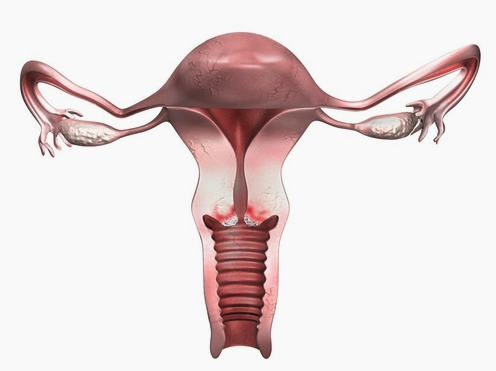
Cytology in national screening collects cells from the cervix with a brush or swab and examines them under a microscope, and it is finished within a few minutes, but because it only checks changes at the cellular level, it is difficult to find every lesion without missing any. To make up for this limitation, an HPV test, which checks for infection, or colposcopy, which examines the cervix under magnification and can lead on to a biopsy if needed, can be considered alongside it.
- Cervical cytology — cells are collected from the cervix and examined under a microscope
- HPV test — identifies the at-risk group by whether the causative virus is present
- Colposcopy — follows an abnormal finding and can lead on to a biopsy
What do ASCUS, LSIL and HSIL on the result sheet mean?
ASCUS on the result sheet means that the cells are not clearly dysplastic but a slight change in shape is seen, and it often leads to a repeat test or a check for HPV infection. LSIL is a mild abnormality that may also resolve on its own, so it is usually checked again with a repeat test after 6 months.
HSIL is a moderate to severe abnormality that includes the possibility of a high-grade lesion, a stage at which the condition is confirmed by biopsy and a prompt decision is made on whether further treatment is needed. SCC means squamous cell carcinoma, a result that calls for prompt medical care, taking into account even the possibility of spread to other sites.
- ASCUS — a slightly abnormal shape that calls for a repeat test or an HPV test
- LSIL — a mild cell change, followed by a repeat test after 6 months
- HSIL — a possible high-grade lesion, for which biopsy and further treatment are considered
- SCC — squamous cell carcinoma, a result that requires checking for possible spread