Kwon Hyunyoung Women's Clinic Doctor's Column
Obstetrics & Gynecology Column

How Can I Tell Abnormal Bleeding From a Normal Period?

How to tell whether bleeding outside the expected period date is a normal period or abnormal bleeding, based on cycle, duration, amount and colour, along with the causes and when to be tested.

Published 2026-10-21 Updated 2026-10-21 Reviewed by Hyunyoung Kwon, Medical Director · Obstetrics & Gynecology Specialist

When bleeding appears outside the expected period date, or comes around the time of a period but is light and stops within 1 to 2 days, it is not easy to tell whether it is a period or abnormal bleeding. In short, a normal period comes every 21 to 40 days and lasts about 3 to 7 days, bleeding outside that window should raise the suspicion of abnormal bleeding, and if the same symptom continues for 2 months or longer, testing is advisable. This article covers the differences between the two types of bleeding and their causes.

01

What does a normal period look like?

Key point
A normal period returns at fairly regular intervals of 21 to 40 days, lasts about 3 to 7 days once it starts, and becomes lighter day by day. The colour also shifts from red to a dark reddish brown as it ends, and this regularity is the first basis for telling it apart from abnormal bleeding.

A normal menstrual cycle is between 21 and 40 days, and although it varies with a person's constitution and hormonal state, most periods show a regular pattern, returning at around the same time. Knowing how many days apart one's own periods come makes it possible to notice bleeding that falls outside the expected date, so the regularity of the cycle is the basic standard for identifying abnormal bleeding.

Bleeding in a normal period usually lasts about 3 to 7 days and becomes lighter as the days pass. The colour is also a clue: it starts out red and gradually turns a dark reddish brown as the period ends, so checking whether duration, amount and colour all follow this course helps in judging whether the bleeding is a normal period.
Anatomy illustration related to How Can I Tell Abnormal Bleeding From a Normal Period?
02

What kind of bleeding should make me suspect abnormal bleeding?

Key point
Bleeding that appears outside the normal period should raise the suspicion of abnormal bleeding. It usually shows up as bright red bleeding that is lighter than a period and lasts only about 1 to 2 days, but in some people it continues for 3 days or more, so its irregularity should be considered as well.

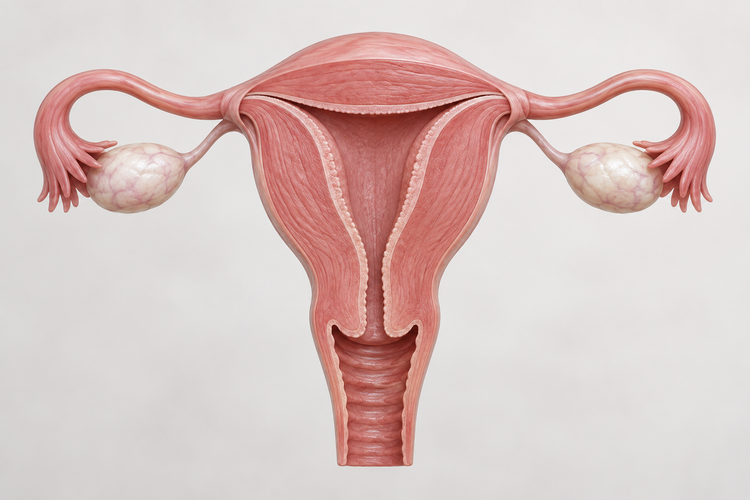
Abnormal bleeding is bleeding that occurs outside the normal period, and it can arise mainly from the uterus, cervix, ovaries, fallopian tubes or vagina. Even bleeding that overlaps with the expected period date can be light, more painful than usual, or stop within 1 to 2 days, so it is not easy to tell a period from abnormal bleeding by the cycle alone.

A short duration, a small amount and a bright red colour are described as the typical features of abnormal bleeding, but they do not appear in the same way in everyone. In some people the bleeding continues for 3 days or more, and patterns differ from person to person, so it is important to look at how irregular the timing, amount and duration are compared with the usual period.

  • Duration — often brief, lasting about 1 to 2 days and then stopping
  • Amount — often lighter than a usual period
  • Colour — often bright red, unlike a period, which ends in a dark reddish brown
03

What causes abnormal bleeding?

Key point
Abnormal bleeding can arise from several factors, including uterine conditions, hormonal imbalance, medication and stress, and it is related to the health of the uterus. If it keeps recurring, it should be seen as a sign that something is wrong, and when the same symptom continues for 2 months or longer, testing to find the cause is advisable.

Recurring abnormal bleeding should be regarded as a signal that something is wrong in the body, and possible causes include uterine conditions such as uterine fibroids, uterine polyps, endometriosis and endometrial hyperplasia, as well as hormonal imbalance and medication. Abnormal bleeding can also occur when ovulation is disrupted by immature follicles, as in polycystic ovary syndrome, so the menstrual cycle as a whole is reviewed.

When abnormal bleeding is caused by a problem in the uterus or ovaries, it can also affect a future pregnancy, so it is important to watch it carefully and manage it with appropriate treatment. If the same symptom continues for 2 months or longer, it is advisable to be tested to find the cause and, for the sake of early detection, to seek help from a medical team.

  • Uterine conditions — uterine fibroids, uterine polyps, endometriosis and endometrial hyperplasia can be the cause
  • Hormonal imbalance — when hormonal balance is disturbed, bleeding can occur outside the period as well
  • Medication — a medicine currently being taken is sometimes suspected as the cause of abnormal bleeding
Doctor's view

How the doctor decides

Hyunyoung Kwon, Medical Director · Obstetrics & Gynecology Specialist

I do not decide based only on bleeding being short and light

I do not conclude whether bleeding is abnormal bleeding or a period simply because it is short, at 1 to 2 days, and light. The features of abnormal bleeding are only a typical pattern, and in some people it continues for 3 days or more. So I also ask how irregular the timing, amount and colour of the bleeding are compared with the usual period pattern, and I judge by the overall course rather than by one or two features.

I start by checking the usual menstrual cycle

Before I look at the bleeding itself, I first check whether the usual menstrual cycle repeats regularly within 21 to 40 days and whether the period lasts about 3 to 7 days. Knowing how regular the cycle is allows me to tell whether this bleeding falls within the normal period or occurred outside it. Once I have set this baseline, I then look at the amount and colour of the bleeding.

I decide when to test based on how long it keeps recurring

I do not conclude that a specific condition is present just because abnormal bleeding has occurred. I first look at how often the same symptom recurs, and if it continues for 2 months or longer, I recommend testing to look for causes such as uterine conditions, hormonal imbalance or medication. Problems in the uterus or ovaries can also affect a future pregnancy, so I decide how to manage the bleeding after confirming the cause.

Summary

In summary

Abnormal bleeding and a period can be told apart by looking at cycle, duration, amount and colour together. A normal period comes every 21 to 40 days, lasts about 3 to 7 days and turns a dark reddish brown, whereas bleeding outside that window should raise the suspicion of abnormal bleeding. If the same symptom continues for 2 months or longer, an obstetrics and gynaecology visit is advisable for the sake of early detection.

FAQ

Frequently asked questions

QIs bleeding that lasts only 1 to 2 days and then stops also abnormal bleeding?
A

Even when it overlaps with the menstrual cycle, bleeding that is light, more painful than usual and stops within 1 to 2 days may be abnormal bleeding. Patterns differ from person to person, so its irregularity should be compared with the usual period.

QWhere does abnormal bleeding come from?
A

Abnormal bleeding can arise mainly from the uterus, cervix, ovaries, fallopian tubes or vagina. A consultation and testing are needed to confirm the site and the cause of the bleeding.

QWhen should I be tested?
A

If the same symptom continues for 2 months or longer, it is advisable to be tested to find the cause. Problems in the uterus or ovaries can also affect a future pregnancy, so it is better not to put it off.

Medical review
Hyunyoung Kwon, Medical Director · Obstetrics & Gynecology Specialist
This content is general medical information and may not apply to every individual. Diagnosis and treatment are decided through a consultation.