When an ovarian age test gives a result higher than a person's actual age, it is easy to conclude that the body will have difficulty becoming pregnant. This figure only shows the number of eggs that remain. It is not a score that judges egg quality or whether pregnancy is possible.
This article covers what the ovarian age test (AMH) means, how to interpret a low or high result, and the steps for building a pregnancy plan after testing.
What does the ovarian age level show?
The AMH level is an indicator related to the number of eggs remaining in the ovaries, and a smaller number does not mean that egg quality is poor. A single healthy egg is enough for pregnancy, so it is not uncommon for women with a low level to achieve a natural pregnancy.
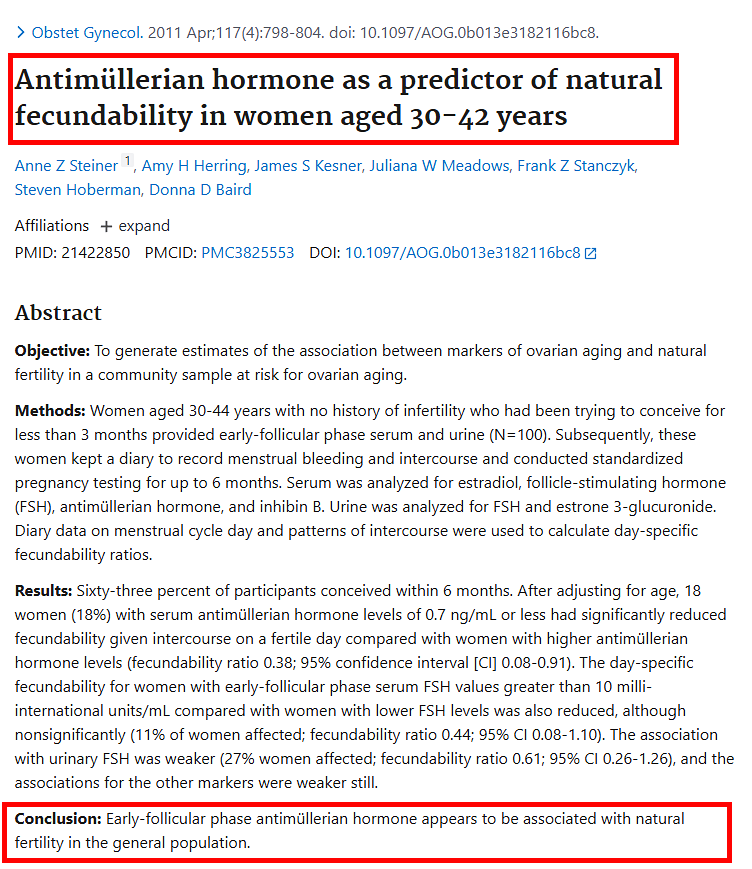
A clinical study analysed 100 women aged 30 to 42 who had no history of infertility and had been trying to conceive for less than 3 months. It found no difference in the natural pregnancy success rate or the time taken to conceive between the low-AMH and high-AMH groups, which shows that this level is not a measure that determines egg quality.
If my AMH level is high, can I feel reassured?
A high AMH level can be seen as a state in which the process of eggs maturing and being released has not been running smoothly, so the level alone does not show that pregnancy will come easily. Polycystic ovary syndrome is a typical condition that causes ovulation disorders, and when it is present the AMH level is commonly measured as high.
Rather than judging by a single number, the function and quality of the ovaries need to be looked at together to gauge the actual chance of pregnancy. Some women become pregnant with a low level, and some with a high level experience ovulation disorders. This shows that a test result is one of several pieces of information for understanding the body's current condition.
Which tests are used alongside the result?
The antral follicle count (AFC) refers to the number of early eggs growing toward the mature stage, and it is measured in both ovaries by ultrasound. If AMH is low but AFC is sufficient, the total number of eggs is small but mature follicles are ample, so a repeat test is recommended, taking into account the effect of the menstrual cycle or general condition.
If both AMH and AFC are low, ovarian function is regarded as reduced, and treatment options related to ovulation are reviewed. Blood tests, ultrasound and ovulation patterns are first checked together. After that, the embryo condition and the uterine environment are also reviewed step by step. Only then can it be judged whether this is the right time to work on raising the chance of natural pregnancy.
- Low AMH with sufficient AFC — mature follicles are ample, so a repeat test is recommended
- Both AMH and AFC low — ovarian function is reduced, so treatment is reviewed
- Blood tests, ultrasound and ovulation patterns — checked step by step to guide the approach
How should I manage things after testing?
There is no way to increase the number of eggs, but it is possible to keep the remaining eggs healthy, so lifestyle after testing has a real influence on the chance of natural pregnancy. Natural pregnancies are seen in cases where daily habits are managed in addition to any treatment or procedure.
- Regular exercise — helps maintain ovulation and hormonal balance
- Sleep and stress management — affects the rhythm of hormone secretion
- Limiting caffeine and alcohol — helps in managing egg quality
- Maintaining a healthy weight — affects the ovulation cycle and hormone levels
- Supplement consultation — confirm the necessary nutrients with a specialist and take them as advised