Kwon Hyunyoung Women's Clinic Doctor's Column
Obstetrics & Gynecology Column

Can You Work Out Your Ovulation Day from Your Menstrual Cycle Alone?

How to calculate the ovulation day and the fertile window from the menstrual cycle, and the body signals that can be checked when the cycle is irregular.

Published 2026-11-02 Updated 2026-11-02 Reviewed by Hyunyoung Kwon, Medical Director · Obstetrics & Gynecology Specialist

Estimating the ovulation day only from how long remains until the next expected period can easily be off by several days. The calculation should count backwards from the next expected period, not forwards from the day the last period started.

Ovulation, the release of the egg, happens on a single day, but the time in which pregnancy is possible stretches over several days around it. This article covers, in order, the calculation for regular and irregular cycles, the range of the fertile window, and daily care around ovulation.

01

How is the ovulation day calculated?

Key point
The ovulation day is calculated by counting back 14 days from the next expected period, not from the day the last period started. This works because the luteal phase averages a fairly constant 14 days, and the fertile window should then be widened before and after this date.

Subtracting 14 days from the next expected period gives the day of ovulation itself, because the luteal phase, the time from the release of the egg until the next period, is generally fixed at about 14 days. Cycle length varies from person to person, but the luteal phase is relatively constant, so the calculation counts backwards from the expected date.

The egg survives for about 24 hours, but sperm can survive in the body for 3 to 5 days, so pregnancy can result from intercourse before ovulation. For this reason, it is safer to set the fertile window broadly, from 5 days before ovulation to 1 day after it.

  • Length of the luteal phase — usually stays at around 14 days
  • Lifespan of the egg — about 24 hours after release
  • Survival of sperm — up to 3 to 5 days inside the body
  • Range of the fertile window — from 5 days before to 1 day after ovulation
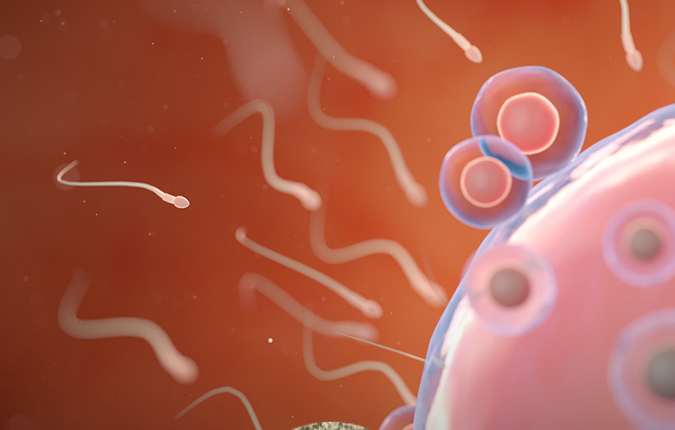
Anatomy illustration related to Can You Work Out Your Ovulation Day from Your Menstrual Cycle Alone?
02

Is it impossible to calculate the ovulation day when the cycle is irregular?

Key point
An irregular cycle does not make calculation impossible. Recording the actual cycles over 3 months shows the average and the variation, and adding body signals such as changes in cervical mucus and basal body temperature makes it possible to estimate the ovulation day.

When the cycle varies from month to month, counting back 14 days alone leads to a large error, so the intervals between period start dates over the past 3 months should be recorded first to identify the shortest and longest cycles. This range becomes the basis for setting the ovulation day as a window rather than a single date.

Clear, stretchy mucus resembling raw egg white is a sign that ovulation is near, and if the temperature measured right after waking, before getting up, rises 0.3 to 0.5°C above usual, it is likely to be the day of ovulation. Checking both signals together can reduce the error in prediction.

  • Average cycle over 3 months — identify the shortest and longest cycles
  • Change in mucus clarity — clear, transparent mucus is a sign that ovulation is near
  • Change in basal body temperature — a rise of 0.3 to 0.5°C suggests a likely ovulation day
03

Exactly how long does the fertile window last around ovulation?

Key point
The fertile window is not just the day of ovulation; it should be set broadly, from 5 days before ovulation to 1 day after. Sperm survive longer than the egg, so pregnancy can occur even from intercourse in the days before ovulation.

It is easy to think that paying attention only to the day of ovulation is enough, but sperm can survive in the body for 3 to 5 days, so fertilisation can result from intercourse in the few days before ovulation. The start of the fertile window therefore needs to be placed well ahead of the ovulation day.

By contrast, the time after ovulation is kept short, because the egg lives only about 24 hours, and the chance of fertilisation drops sharply once 1 day has passed after ovulation. The fertile window is widened unevenly around ovulation because the egg and sperm survive for different lengths of time.

04

How should daily life be managed during the ovulation phase?

Key point
The ovulation phase is a time of rapid hormonal change, so attention to daily habits is needed alongside tracking. The basics are keeping the lower abdomen warm, choosing breathable clothing as discharge increases, and avoiding excessive stress, which can upset hormonal balance.

Around ovulation, hormone levels rise and fall sharply over a short period and the body can become more sensitive, so it helps to keep the lower abdomen warm rather than letting it get cold. Because discharge increases at this time, choosing breathable underwear is also advisable.

Excessive stress directly affects hormonal balance, so managing it is an essential part of care during ovulation. When stress builds up, observation markers such as basal body temperature and mucus changes can appear differently from usual, and the reliability of prediction can fall considerably.

  • Keeping the lower abdomen warm — it helps to keep the lower abdomen from getting cold
  • Choosing breathable clothing — discharge increases, so breathable clothes are preferable
  • Managing excessive stress — avoid it, as it can affect the reliability of tracking
Doctor's view

How the doctor decides

Hyunyoung Kwon, Medical Director · Obstetrics & Gynecology Specialist

I do not rely on the cycle calculation alone

I refer to the method of subtracting 14 days from the next expected period, but I do not conclude the ovulation day from that alone. It is an average based on the assumption that the luteal phase is constant, so the error grows when the actual cycle is short or long. I treat the calculated date as a baseline, and I believe advice fits the real situation only when that date is matched against signals such as basal body temperature and mucus changes.

I first check the actual cycles over 3 months

When a patient tells me the cycle is irregular, I first ask about the intervals between period start dates over the past 3 months. An average alone cannot show what rhythm the body actually has, and only the difference between the short and long cycles lets me estimate the range of error. Only after securing this record do I decide which methods to add.

An irregular cycle does not immediately call for detailed tests

I do not recommend detailed tests straight away just because a patient says the cycle is irregular. I first guide patients to observe signals such as a change in mucus clarity or a rise of 0.3 to 0.5°C in basal body temperature, and I consider further tests when no pattern emerges. In my judgement, not skipping self-observation is the way to reduce unnecessary tests.

Summary

In summary

Estimating the ovulation day from the menstrual cycle starts with counting back 14 days from the next expected period, but checking signals such as mucus changes and basal body temperature as well can reduce the error. If the cycle is irregular, keeping a record over 3 months is the starting point. If the calculation and observations repeatedly disagree, or if periods stop or bleeding appears, the cause should be confirmed at a medical visit.

FAQ

Frequently asked questions

QCan the ovulation calculation be used if the cycle is not 28 days?
A

Yes. Subtract 14 days from the next expected period; this works because the length of the luteal phase is generally constant.

QWhy does the fertile window start 5 days before ovulation?
A

Sperm can survive in the body for 3 to 5 days, so fertilisation can occur from intercourse before ovulation.

QWhat should be done if the calculated ovulation day keeps differing from the actual one?
A

If it differs repeatedly over several months, a medical consultation is advisable. If periods stop or bleeding appears, the cause needs to be confirmed.

Medical review
Hyunyoung Kwon, Medical Director · Obstetrics & Gynecology Specialist
This content is general medical information and may not apply to every individual. Diagnosis and treatment are decided through a consultation.